


Golf course safety leaders carry more weather-related liability than most people outside the industry realize. Every hole, cart path, and open fairway puts players and staff into extended lightning exposure. Your response plan is what turns a fast-moving storm from a disaster into an inconvenience.
Golf clubs face pressure to keep tee times, tournaments, and events moving as scheduled. Downtime hurts revenue, so every warning system decision has both a safety and a business impact. The five priorities below give you a working framework for lightning safety on any course.
What Are the Top Golf Course Safety Priorities?
Golf course safety priorities include early warning, clear evacuation routes, defined shelters, staff training, and reliable equipment. You need prediction technology that warns before the first strike, not just detection after the fact. Each priority feeds the others, so a weak link anywhere shortens your response window under pressure.
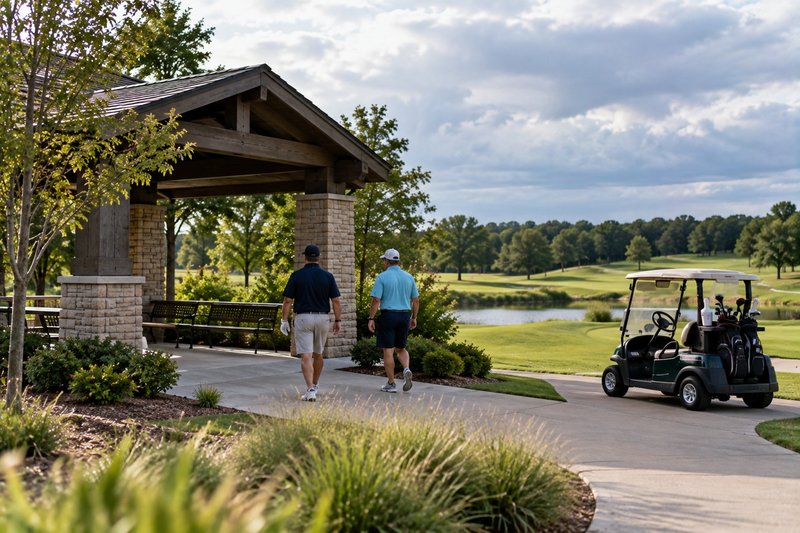
The 5 Golf Course Safety Priorities Every Club Manager Should Know
Golf course safety works when your program combines clear priorities, tested procedures, and reliable warning tools. Managers who define these priorities in advance move faster when a storm actually rolls in. The five priorities below cover the core areas every club should address before peak season.
The five lightning safety priorities every club manager should know include:
- Early warning that alerts before the first strike, not after strikes have already occurred nearby
- Clearly marked shelters within a short walk or cart ride from every playable hole
- Documented evacuation routes and signal protocols known to every staff member and marshal
- Named decision authority for suspending and resuming play at any time of day
- Reliable equipment built to run for a decade of daily outdoor field operation
Early warning is the single most valuable investment for any active course during storm season. According to USGA course evacuation guidance, moving players and staff to shelter is critical during dangerous weather conditions. Every additional minute of warning gives your team more time to reach shelter safely.
Signal protocols matter as much as the equipment behind them for staff and player response. According to USGA suspension and resumption procedures, one prolonged horn note indicates immediate suspension for lightning danger.
In practice, these five priorities work only when they operate together as a single response plan. Your program is only as strong as the weakest link on the busiest tournament day.
Why Prediction Beats Detection on the Course
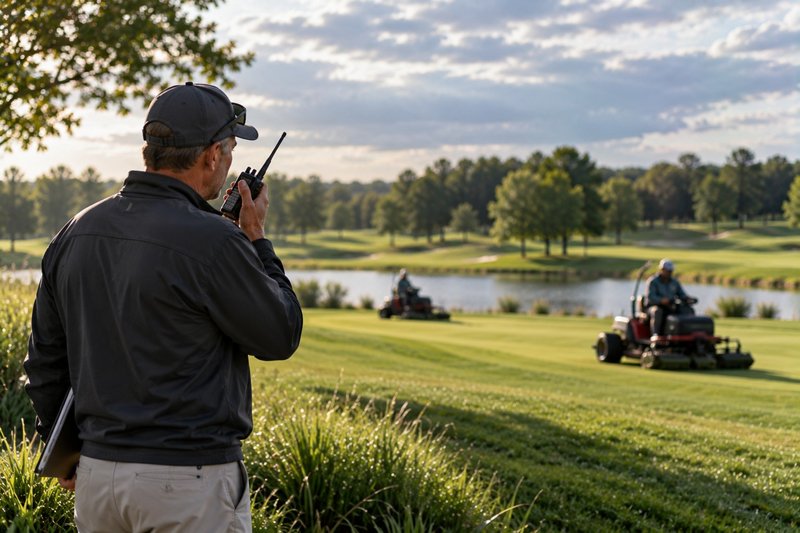
Golf course safety hinges on how much time your team has before the first bolt lands. Detection systems tell you where lightning already struck, which is minutes too late for evacuation. Prediction systems read the atmospheric electrostatic field and warn before any strike hits the ground.
Thor Guard has served golf since the 1990s, with adoption by the United States Golf Association. Typical warning times fall between 8 and 20 minutes before the first strike lands locally. For a spread-out 18-hole course, those minutes decide whether players reach a shelter in time.
Prediction also improves the back end of a storm, when standard timers hold play unnecessarily long. Thor Guard's analysis of the 30/30 rule explains why arbitrary all-clear countdowns cost operational time. You resume play when atmospheric energy actually drops, not when a generic timer expires overhead.
Additionally, Thor Guard's prediction versus detection comparison explains the science behind each method in depth. You get earlier warnings and a shorter all-clear window that respects live conditions.
How Thor Guard Supports Golf Course Safety Programs
Thor Guard designs golf course safety systems that combine prediction, detection, and on-site weather data. The TG360 platform samples the atmospheric field over 170,000 times per second on your rooftop. Voice of Thor horns and strobes deliver audible and visual alerts across every hole on the course.
Radio-controlled remote horn clusters extend coverage to reach players spread across large 18- or 36-hole layouts. The system continues operating when power or internet drops, which matters during severe storms overhead. Superintendents and grounds crews get the same protection as members and tournament participants outside.
For events outside the main course, the Nomad unit delivers portable prediction in a compact form. Charity outings, junior clinics, and off-site events gain the same first-strike warning as your main course. Similarly, ThorAlert mobile push notifications keep pro shop staff and marshals informed away from a dashboard.
In practice, Thor Guard systems are built for a decade or more of daily outdoor operation. The long service life spreads the initial cost across many golf seasons of daily use.
Build a Stronger Safety Program This Season
Golf course safety programs work when technology, training, and clear protocols reinforce each other every day. Prediction gives your team the earliest possible warning window before the first strike lands nearby. You reduce injury risk, cut unnecessary downtime, and keep tee times running when the sky permits.
Thor Guard has built prediction and warning systems since 1973 for outdoor operations worldwide. You can read about our company and full product line at any time. To scope a system for your specific course, get a hold of our team for a walkthrough.

