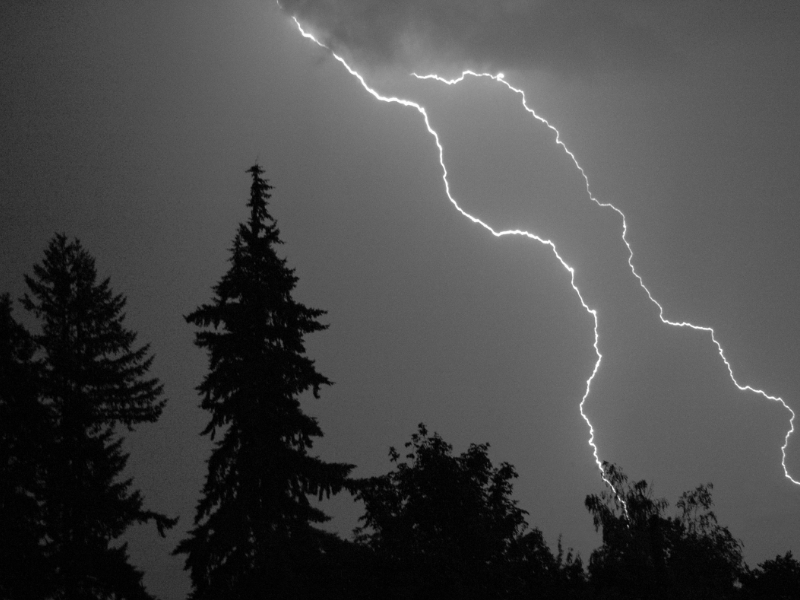


A single lightning strike does not need to come from directly overhead to reach your site. Storms produce strikes that travel miles beyond the visible rain and cloud cover above them. Your outdoor operation can face real danger while the sky above still looks clear and calm.
Safety protocols built around what you can see will always underestimate the actual risk zone. Warning systems that only report strikes after they land leave your team exposed at the worst moment. Understanding how far lightning travels shapes how far ahead your alert system needs to reach.
How Far Can a Lightning Strike Travel From a Storm?
A lightning strike can travel more than 3 miles from a storm's core, and sometimes 10 to 15 miles. Some anvil-produced strikes reach even farther, hitting ground under clear skies well away from the storm. You need warning systems that protect the full risk zone, not just the visible weather overhead.
Why Lightning Strike Distance Extends Far Beyond the Visible Storm

A dangerous lightning strike can happen miles away from any rain or dark clouds you see. Charge builds inside a thunderstorm and can travel horizontally out of the cloud's upper regions. The bolt then angles downward and hits ground far outside the storm's obvious footprint.
According to weather.com, lightning often strikes more than 3 miles from a storm's core. Strikes have also been documented at distances of 10 to 15 miles from the parent storm. For any outdoor facility, that distance covers entire neighborhoods, campuses, or industrial sites.
The National Oceanic and Atmospheric Administration (NOAA) describes these strikes as bolts from the blue. According to NOAA's National Severe Storms Laboratory, these flashes travel several miles through clear air before hitting the ground. Their appearance from clear sky is exactly what makes them dangerous to your people outside.
In practice, a strike from 10 miles away can hit ground when your sky looks clear. You cannot use visual cues to judge safety when a storm sits well outside your view.
How Bolts From the Blue Change Your Safety Calculus
A bolt from the blue is a specific type of lightning strike that catches people off guard. Positive charges near the top of a storm can travel horizontally before angling downward to ground. The bolt strikes areas that look safe under sunny or lightly clouded skies overhead.
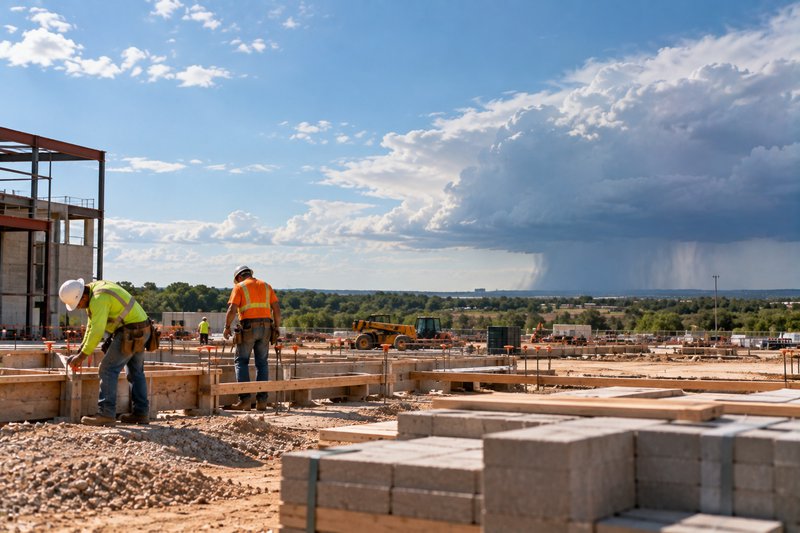
Golf courses, beaches, and open athletic fields all sit inside that extended risk zone during nearby storms. You may hear no thunder and see no rain when a bolt from the blue lands close. Traditional thunder-based safety rules miss this entire class of strikes at your site.
Bolts from the blue create specific problems for outdoor operations:
- Clear skies at your location can hide an active storm 10 or more miles away
- Positive strikes carry higher energy and cause more severe injuries when they hit
- Standard "when thunder roars, go indoors" rules fail without any audible thunder
- Detection-based alerts arrive too late once the strike has already occurred nearby
In short, your safety plan needs coverage that extends beyond what your eyes can confirm. Prediction technology sees the atmospheric conditions that produce these strikes before they happen locally.
Thor Guard's prediction versus detection comparison explains the science behind first-strike warnings for these events. You gain visibility into charge buildup that no visual check or detection network can catch. Lead time matters most when the danger comes from miles outside your local weather.
How Prediction Shrinks the Lightning Strike Risk Window
Prediction technology reads the atmospheric electrostatic field that builds before any lightning strike occurs. Sensors track the charge accumulation overhead and issue alerts before the first bolt reaches ground. You gain minutes to move people, close operations, or activate shelter-in-place plans safely.
Thor Guard has built prediction and warning systems since 1973 for outdoor operations worldwide. The TG360 platform samples the atmospheric field over 170,000 times per second on-site. Typical warning times fall between 8 and 20 minutes before a first strike arrives locally.
For remote or mobile work, Nomad delivers the same prediction algorithms in a compact form. Construction crews, emergency response vehicles, and portable command posts gain the same first-strike protection. Similarly, marine operations use Neptune for the same technology built into a marine-grade housing.
Additionally, you can review Thor Guard's analysis of the 30/30 rule for context on standard protocols. Prediction closes the gap that detection-only rules leave open on both the front and back end.
Protect Your People Before the Next Storm Arrives
A lightning strike does not respect the boundary of the visible storm above your outdoor operation. You need a warning system that covers the full risk zone, including distant bolts from the blue. Prediction technology gives your team the minutes needed to protect people before the first strike lands.
Thor Guard designs systems built for a decade or more of dependable outdoor field operation. You can learn about our company and product line at any time. To discuss a lightning warning system built around your site, contact our team to start the conversation.