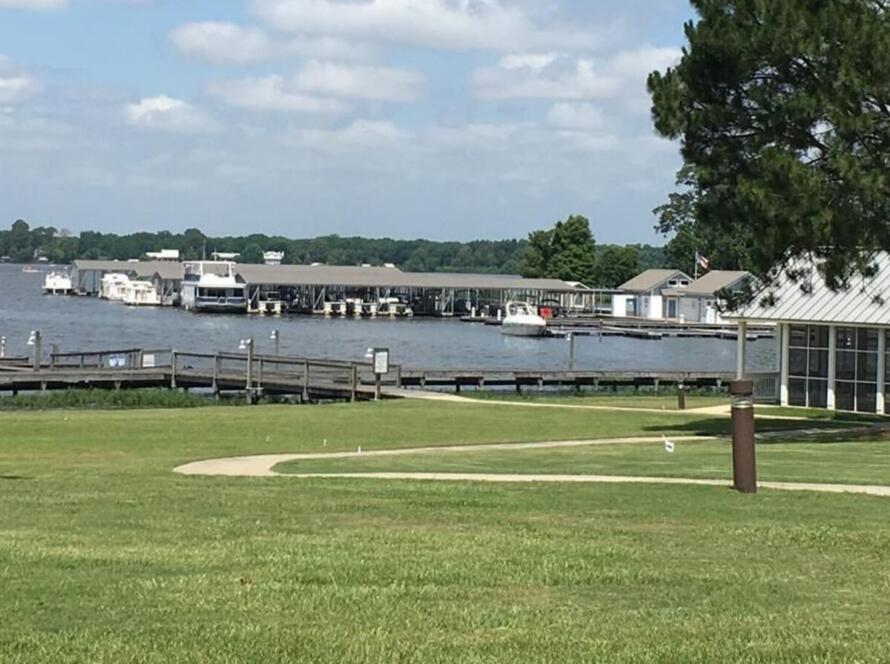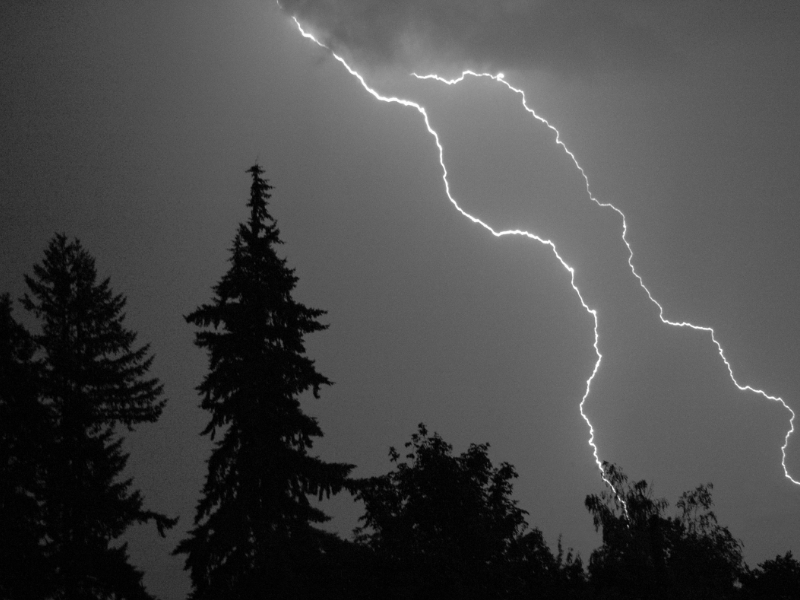


Your outdoor operation lives and dies by minutes when lightning detection alerts arrive too late. A soccer match, a flight line, or a golf tournament all share one vulnerability under storms. When conditions turn dangerous overhead, you need enough time to move people to safe shelter.
Most weather safety programs still rely on lightning detection, which reports strikes only after they occur nearby. Prediction technology takes a different path, warning you before the first cloud-to-ground strike ever lands. Understanding the gap between these two approaches shapes every safety decision your leadership team must make.
What Is the Difference Between Lightning Detection and Lightning Prediction?
Lightning detection identifies strikes that have already happened, while prediction forecasts strikes before they occur locally. Detection tells you where lightning was, and prediction tells you when lightning is likely near you. The practical difference is warning time, which is what protects your people, assets, and outdoor operations.
Why Warning Time Outweighs Lightning Detection Alone
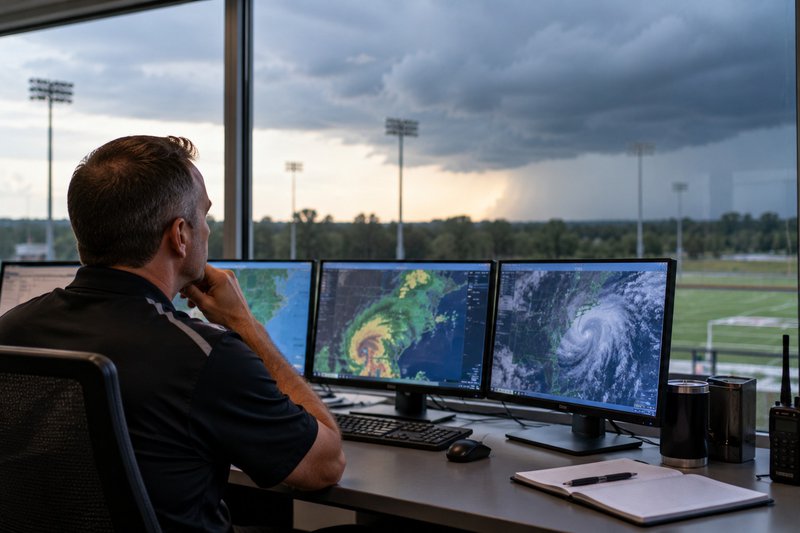
Warning time determines whether your evacuation plan works or fails under real storm conditions. A beach with hundreds of swimmers or a stadium with open bleachers needs many minutes to reach shelter. Lightning detection systems compress that window because they alert you only after a nearby strike has happened.
According to National Weather Service lightning fatality data, the United States recorded 20 direct lightning fatalities during 2025. Many of those victims were within minutes of shelter but simply ran out of time to reach it.
Longer warning windows change how your safety program operates day to day:
- You clear exposed areas before conditions turn dangerous, not during active strikes
- You avoid chaotic last-minute evacuations across large or complex facilities
- You reduce liability exposure by acting on forecast risk rather than observed damage
- You cut unnecessary downtime by resuming activity when atmospheric energy actually drops
Additionally, the back end of the storm matters as much as the leading edge. Standard protocols require a 30-minute wait after the last observed strike, regardless of live atmospheric conditions. Thor Guard's analysis of the 30/30 rule explains why arbitrary countdowns waste operational hours without improving safety.
Prediction technology measures the electrostatic field continuously, so your all-clear reflects live readings rather than guesswork. In practice, you spend less time waiting on generic timers and more time running your outdoor operation safely.
How Lightning Detection Networks Fall Short on Advance Notice
Traditional lightning detection networks triangulate electromagnetic signals from strikes that have already occurred somewhere in the region. The resulting data is useful for mapping storms in progress, yet it cannot warn about first strikes locally. For any facility with people outdoors, a first strike is the single moment of greatest exposure.
Detection has real value for post-storm review and broad situational awareness across large regions. However, relying on lightning detection alone leaves you reactive rather than proactive when storms build nearby. The gap becomes especially dangerous with bolts from the blue, which can travel miles outside a visible storm cell.
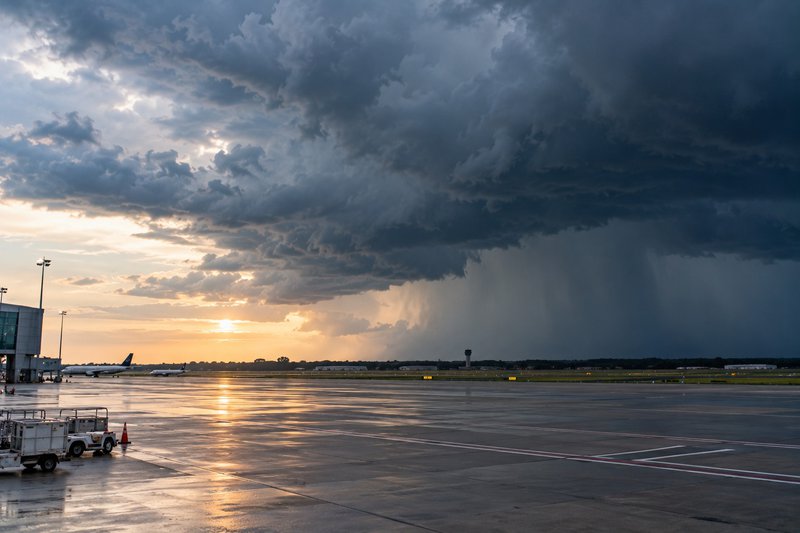
According to the National Lightning Safety Council 2024 analysis, nearly two-thirds of lightning deaths from 2006 through 2024 involved outdoor leisure activities. Many victims had shelter close at hand yet lacked advance warning about developing conditions overhead.
You can review Thor Guard's prediction versus detection comparison for the underlying science behind each method. Similarly, on-site prediction reduces your reliance on external networks and delayed strike triangulation. In short, detection reports history while prediction actively protects your future outdoor operations and people.
How Thor Guard Predicts Lightning Before the First Strike
Thor Guard measures the atmospheric electrostatic field, the same energy field within which thunderstorms build overhead. When charges accumulate near your site, algorithms convert those readings into a live threat status. Typical warning times fall between 8 and 20 minutes before the first strike arrives locally.
The TG360 platform anchors Thor Guard's current product line for permanent facility installations. Its rooftop sensor samples the sky over 170,000 times per second, paired with a Davis Vantage Pro 2 station. Voice of Thor horns and strobes deliver notifications across your facility, even when power or internet drops.
For customers required to follow lightning detection mandates, TG360 Hybrid layers prediction over the standard detection rule. You keep your compliance protocol fully intact while gaining true first-strike warning capability onsite. In practice, the platform also issues severe storm and tornado alerts, plus heat-index and wet-bulb globe temperature advisories.
For mobile or marine operations, Nomad and Neptune bring the same prediction algorithms in compact form factors. Nomad fits inside vehicles, construction sites, and portable command posts across your land-based operations. Neptune serves yachts and ocean vessels that need on-site data far from any shore.
Upgrade Your Weather Safety Program With Thor Guard
Warning time is the single most important variable in any outdoor weather safety program. Prediction technology gives you the minutes your team needs to move people safely and confidently. Detection alone leaves you reacting to a strike that has already put your operation at risk.
Thor Guard has built prediction and warning systems since 1973, with installations across golf, athletics, education, aviation, and defense. You can learn more about our company and the full product line at any time. To discuss a system built around your facility, get in touch with our team today.