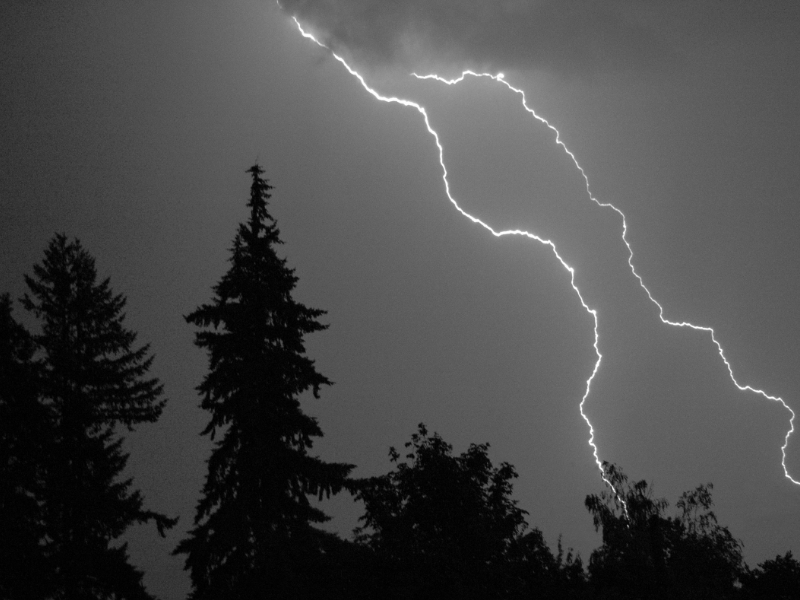


Construction site safety hinges on how fast your crew can move to shelter when lightning approaches. Open work areas, scaffolding, cranes, and metal materials all raise strike risk for outdoor teams. Your response window closes fast, so every minute of advance warning changes what your team can do.
Regulators expect a written plan, trained workers, and documented response actions during severe weather events. Downtime costs real money, but a lightning fatality on your site costs more than any delay. The six safety measures below give you a working framework for any active construction project.
What Are the Core Construction Site Safety Measures for Lightning?
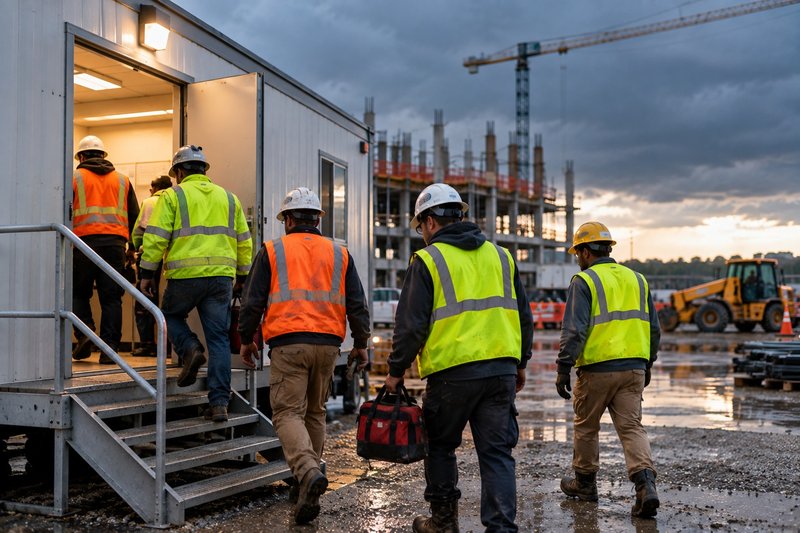
Construction site safety measures should include written plans, trained crews, defined shelters, and early warning systems. You need suspension thresholds for scaffolding, crane, and roofing work when lightning approaches your active area. Prediction technology and documented response procedures together turn storm delays into safe, structured work stoppages.
The 6 Lightning Safety Measures for Construction Site Safety
Construction site safety programs work when written procedures, trained crews, and reliable warning tools operate together. Superintendents who define these measures in advance move faster when a storm approaches the job site. The six measures below cover the core areas every active project should address before ground breaks.
1. Written Emergency Action Plan
Your emergency action plan should name shelter locations, decision authority, and clear suspension thresholds for every crew. According to OSHA lightning workplace hazard guidance, the construction industry standard sits under 29 CFR 1926.35.
2. Early Warning System for Construction Site Safety
Prediction technology alerts crews before the first strike lands, not after strikes have already occurred nearby. You gain the minutes needed to secure loads, dismount scaffolding, and reach shelter safely.
3. Designated Shelter Locations
Every active work area should have a substantial building or fully enclosed metal vehicle within a short walk. Superintendents should map shelter routes and confirm capacity for the full crew during peak staffing.
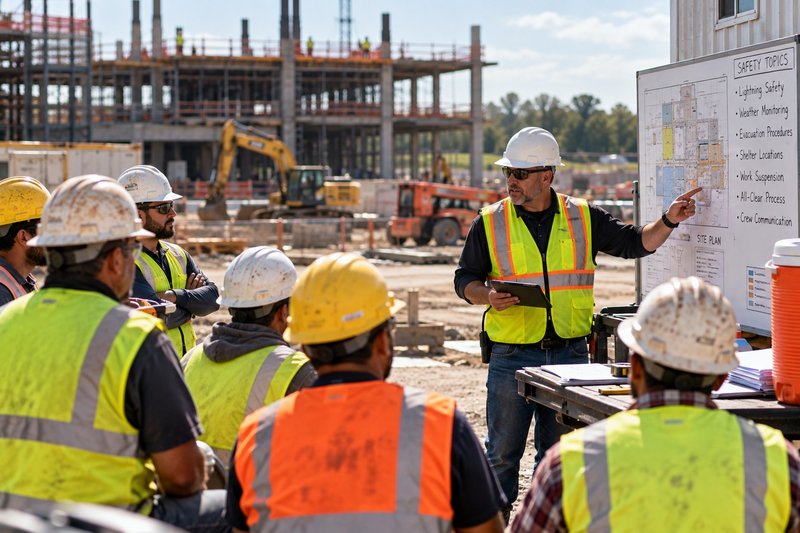
4. Suspension Protocols for High-Risk Work
Scaffolding, crane, and rooftop work carry the highest lightning exposure on any construction site during storms. Written thresholds tell foremen exactly when to call the stop without second-guessing the decision.
5. Crew Training on Construction Site Safety
Every worker should know the shelter route, all-clear procedures, and personal risk factors before storm season begins. Annual training sessions and toolbox talks keep the plan sharp across every new hire and returning crew.
6. Documented Drills and Post-Incident Reviews
Drills reveal weak spots in your plan long before a real storm tests your team under pressure. Post-incident reviews close gaps in the process and support compliance documentation for future audits.
How OSHA Rules Shape Storm Response on Job Sites
OSHA holds construction site safety leaders accountable under the General Duty Clause for recognized lightning hazards. No specific numbered lightning standard exists, but courts have interpreted the clause to cover storm risk. Your emergency action plan must document how crews monitor conditions and take shelter during storms.
According to JSABuilder OSHA construction safety guidance, scaffold work must pause during storms or high winds. The rule sits inside 29 CFR 1926.451(f)(12), and crane hoists face similar suspension requirements. A qualified person may allow work to continue only if fall protection or wind screens are in place.
Documented compliance protects both your workers and your firm during any post-incident inspection or lawsuit. Written suspension thresholds remove ambiguity from the moment when a foreman needs to call the stop. Your safety leaders should train every crew on the specific triggers and shelter routes in advance.
In practice, prediction technology gives your team warning before the first strike triggers a suspension. You reduce guesswork on when to call the stop and when to resume active work safely.
How Thor Guard Supports Construction Site Safety Programs
Thor Guard supports construction site safety through prediction systems built for demanding outdoor field environments. The Nomad unit delivers portable prediction in an emergency-orange package sized for job trailers and vehicles. You get the same first-strike warning technology found in permanent installations, without a rooftop sensor.
For larger sites or long-duration projects, the TG360 platform can mount on a trailer or temporary structure. The system samples the atmospheric electrostatic field over 170,000 times per second on your site. Typical warning times fall between 8 and 20 minutes before the first strike arrives locally.
Voice of Thor horns and strobes deliver audible and visual alerts across the entire job site. The system continues operating when power or internet drops, which matters during severe storms overhead. Similarly, ThorAlert mobile push notifications reach foremen, superintendents, and safety leaders away from the site.
Thor Guard's prediction versus detection comparison explains the science behind first-strike warning technology. Additionally, our 30/30 rule analysis explains why arbitrary countdowns cost you real operational time each storm.
Protect Your Crew Before the Next Storm Rolls In
Construction site safety works when documented plans, trained crews, and reliable technology support each other daily. Prediction gives your team the earliest possible warning window before the first strike lands nearby. You reduce injury risk, cut unnecessary downtime, and give superintendents clearer data for every stop call.
Thor Guard has built prediction and warning systems since 1973 for outdoor operations worldwide. You can read about our company and full product line at any time. To scope a system for your current project, call our team for a fast walkthrough.