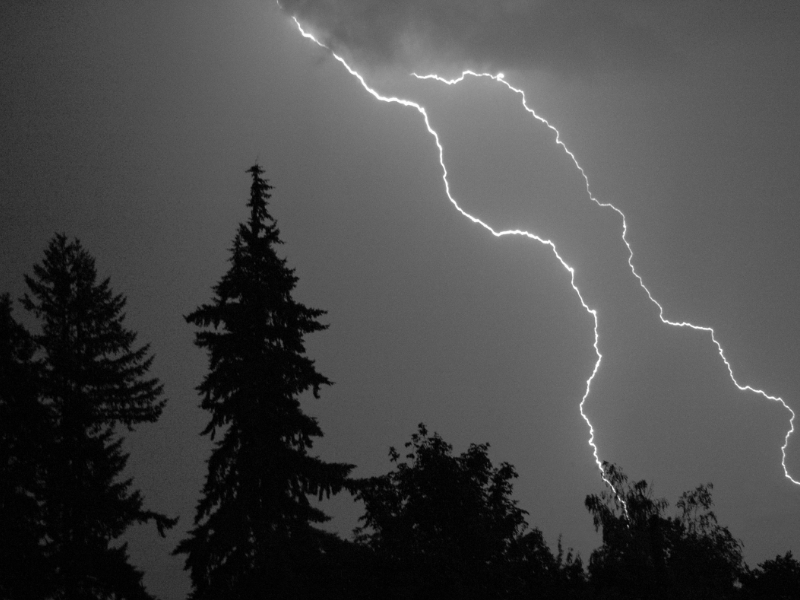



A sunny beach can become dangerous much faster than most people realize. Coastal storms often develop during the same afternoon hours when beaches, splash pads and waterfront parks are busiest. Municipalities are increasingly installing automated lightning prediction and warning systems because lifeguards need enough time to move hundreds of people away from exposed shorelines—not simply confirmation that lightning has already struck nearby.
What Makes Beaches Uniquely Dangerous Lightning Environments
Beaches combine nearly every factor that complicates lightning safety: wide-open ground, water, limited substantial shelter and large crowds spread along long stretches of shoreline. Umbrellas, picnic shelters, lifeguard towers and beach huts aren’t lightning-safe structures. Visitors may also have a considerable walk back to a building or enclosed vehicle.
The danger can arrive before rain. The National Weather Service notes that lightning may strike more than 10 miles from a thunderstorm, beyond the distance at which thunder is normally heard.
Florida’s Lightning Reality — The Numbers That Drive Municipal Action
Florida’s geography, population and outdoor lifestyle give municipalities little room for complacency. According to the National Weather Service, Florida recorded five of America’s 12 lightning deaths in 2024. Lightning remained the state’s second-leading weather-related killer, behind rip currents.
The broader national figure is also sobering. The CDC estimates that approximately 37 million lightning strikes reach the ground across the United States annually. Fatalities tell only part of the story because most people struck survive, sometimes with lasting health consequences.
The Coastal Atmospheric Dynamic — Why Afternoon Storms Form So Predictably
Florida’s familiar afternoon storm cycle begins with unequal heating. Land warms faster than the surrounding ocean, causing heated air over the peninsula to rise. Cooler marine air moves inland as a sea breeze, carrying moisture with it.
Where sea-breeze boundaries meet warmer inland air—or collide with a boundary moving from the opposite coast—the rising air can produce thunderstorms. That’s why a clear Florida morning can give way to electrical activity during a crowded afternoon.
Why Detection Fails at Beaches — The Critical Limitation
Conventional lightning detection identifies the electromagnetic signal produced by a strike. That information is valuable for tracking an active storm, but the first detected strike has already happened.
At a stadium, spectators may reach shelter in minutes. Clearing swimmers, families and lifeguards from a long beach takes considerably longer. A prediction system such as Thor Guard instead monitors changes in atmospheric electrostatic energy, seeking to identify conditions building toward lightning before the first local strike.
How Coastal Municipalities Are Responding — The Installation Pattern
Municipalities are creating networks rather than relying on one centrally located alarm. Sensors and horn clusters are being positioned around beach accesses, parks, pools and other high-use waterfront locations.
Atlantic Beach, Florida, now operates Thor Guard systems at three beach accesses and two parks. Its municipal guidance says the system can provide approximately eight to 20 minutes of warning before a potential cloud-to-ground strike within the monitored area. Manatee County has also installed systems covering Manatee, Cortez and Coquina beaches.
The trend isn’t confined to Florida. Brick Township, New Jersey, approved two warning installations to cover 1.8 miles of shoreline following a fatal lightning incident in a neighbouring community.
The All-Clear Problem at Beaches — Why It’s Different From Every Other Venue
Clearing a beach is difficult; keeping it clear can be harder. Blue sky may return while dangerous electrical energy remains nearby. Visitors naturally want to resume swimming, while municipalities need a consistent standard that doesn’t depend on appearance alone.
The National Weather Service recommends remaining sheltered until 30 minutes after the last thunder. Thor Guard systems can automate the decision based on monitored conditions. In Atlantic Beach, one continuous horn and a flashing strobe indicate danger; three shorter blasts and the end of the strobe signal the all-clear.
Beyond Florida — Coastal Lightning Risk Across the United States
The Gulf Coast, coastal Texas and the Carolinas all experience frequent warm-season thunderstorms. The Jersey Shore has adopted warning infrastructure after serious incidents demonstrated that northern beaches aren’t exempt. Pacific Coast lightning is generally less frequent, but exposed waterfront crowds still require plans wherever thunderstorms can occur.
Local climate changes the frequency—not the basic vulnerability of an open shoreline.
What Beachgoers Need to Know About Coastal Lightning Warning Systems
Beachgoers should learn the local warning signals before entering the water. When a horn sounds or a strobe activates, leave immediately and move into a substantial enclosed building or hard-topped vehicle. Don’t shelter beneath an umbrella, pavilion, tree or open-sided structure.
Thor Guard Lightning Prediction and Warning System’s technology is an added layer of protection, not permission to ignore thunder, darkening skies, lifeguard instructions or weather alerts.
Conclusion
Coastal lightning safety ultimately comes down to time. Detection tells officials what has already occurred; Thor Guard Lightning Prediction can provide the minutes needed to clear an exposed shoreline before the first local strike. For municipalities responsible for crowded beaches and waterfront facilities, that advance notice can turn a rapidly forming storm into a manageable evacuation instead of an emergency.