


A severe thunderstorm warning tells your team that damaging wind or large hail is imminent. Every severe thunderstorm warning demands a fast, informed response from safety managers on site. Knowing what the alert covers helps you protect people before conditions outdoors turn dangerous.
Official warnings carry specific criteria, clear limits, and triggers that shape how your facility should act. Understanding those details turns a confusing alert into a clear prompt for immediate, decisive action. The following five points explain what these warnings mean and how to respond with confidence.
What Does a Severe Thunderstorm Warning Mean for Safety Managers?
A severe thunderstorm warning means damaging wind or large hail is imminent or already occurring nearby. For safety managers, it marks an immediate threat to anyone working or gathering outdoors right then. Your task is to translate that alert into fast, well rehearsed, protective action.

1. What a Severe Thunderstorm Warning Actually Means
A warning differs from a watch, which only means conditions could produce severe storms later. A warning means the danger is happening now, somewhere inside the mapped polygon on radar. According to the National Weather Service, forecasters issue one for 58 mph winds or one-inch hail.
A severe thunderstorm warning therefore confirms a measured, present hazard, not a distant possibility. Treat it as a signal to act immediately, because your window for reaching safety stays short.
2. A Severe Thunderstorm Warning Does Not Cover Lightning
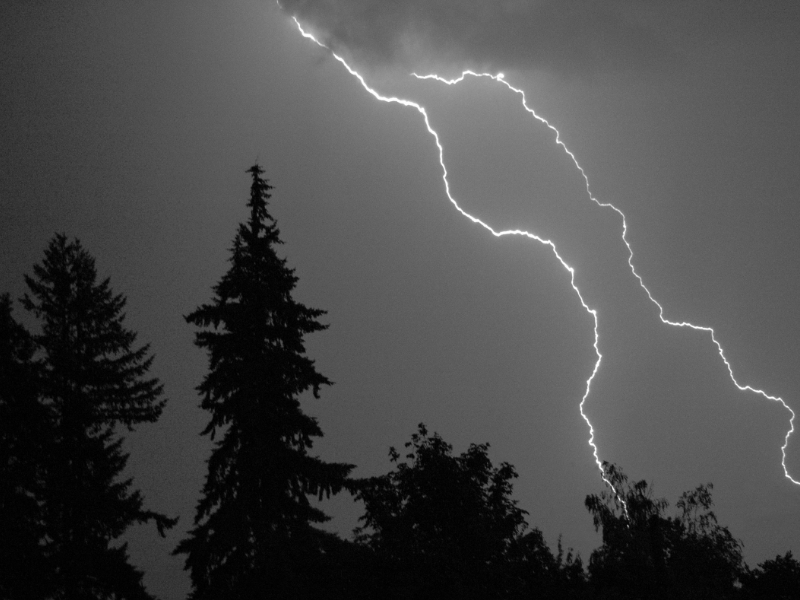
Lightning is not part of the official criteria, even though every thunderstorm produces it constantly. A storm can threaten lives with lightning while never meeting the wind or hail thresholds. Waiting for an official alert can leave your people exposed during ordinary-looking, dangerous storms.
A severe thunderstorm warning covers wind and hail, so lightning safety needs its own separate trigger. Pair official warnings with on-site monitoring that detects lightning risk earlier than wind or hail.
3. Warnings Cover a Storm’s Path, Not Your Exact Site
Forecasters issue storm-based polygons that trace a storm’s expected path across the regional map. Your exact location may sit near an edge, where conditions differ from the warning’s center. Research on rapidly updating warnings shows how lead time can vary widely across one polygon.
A distant storm cell can trigger a wide warning that barely affects your specific grounds. A nearby cell can turn severe long before a regional alert catches up to it. Relying only on broad warnings leaves real gaps in how you read local conditions.
A severe thunderstorm warning for your county may not reflect the sky directly above you. On-site data closes that gap, letting you view live conditions measured on your grounds.
4. Destructive Storms Trigger Automatic Phone Alerts
Not every warning reaches phones automatically, which surprises many managers who rely on push alerts. Forecasters now tag each warning by damage threat, labeled base, considerable, or destructive. According to National Weather Service guidance, only the destructive tag triggers a wireless emergency alert.
Rely on multiple channels, because any single alert path can fail during a fast-moving storm. Redundant channels keep your team informed even when one source goes quiet at a critical moment.
Destructive means baseball-sized hail or 80 mph winds, far above the base warning threshold. A severe thunderstorm warning without that tag still demands action, so never wait for a buzz.
5. A Warning Should Trigger Your Response Plan
An alert only helps if it launches a response your whole team already knows cold. Define who monitors conditions, who makes the call, and where everyone moves for safe shelter. Research on public alert systems stresses clear roles and rehearsed steps for faster protective action.
Set one trigger distance and apply it the same way for every event you host. After the threat clears, wait a defined period before anyone returns to open ground. Written criteria keep decisions objective, removing pressure to resume activity far too soon.
Treat every severe thunderstorm warning as the moment your written plan takes full control. Review and drill that plan before each season, so action feels automatic under real pressure.

Act on Every Severe Thunderstorm Warning With a Plan
Together, these five points turn a severe thunderstorm warning into fast, confident team decisions. Thor Guard strengthens that response by predicting lightning before a strike, not detecting it afterward. For more than 50 years, the company has given facilities extra minutes to reach safety.
Built to serve well beyond 10 years, a reliable system spreads its value across many seasons. Compact prediction units complement public warnings, covering the lightning risk those alerts leave out. Reach out to the team to build warning coverage suited to your facility.