



A construction site is one of the worst places to be when a thunderstorm builds. Crews work high off the ground, surrounded by steel, often with nowhere solid to go. Good lightning safety for construction sites isn’t about reacting to the first flash. It’s about having a plan, a warning system and the habit of stopping early, before anyone is standing on a beam when the sky lets go.
OSHA and NOAA both treat lightning as a real occupational hazard. Their joint fact sheet on lightning safety when working outdoors lists construction (including scaffolding work), roofing, heavy equipment operation and steel erection among the higher-risk jobs. Here’s how to turn that guidance into something your supervisors can actually use on a busy site.
Why Construction Sites Are Uniquely Exposed to Lightning (Cranes, Steel, Open Ground, Scaffolding)
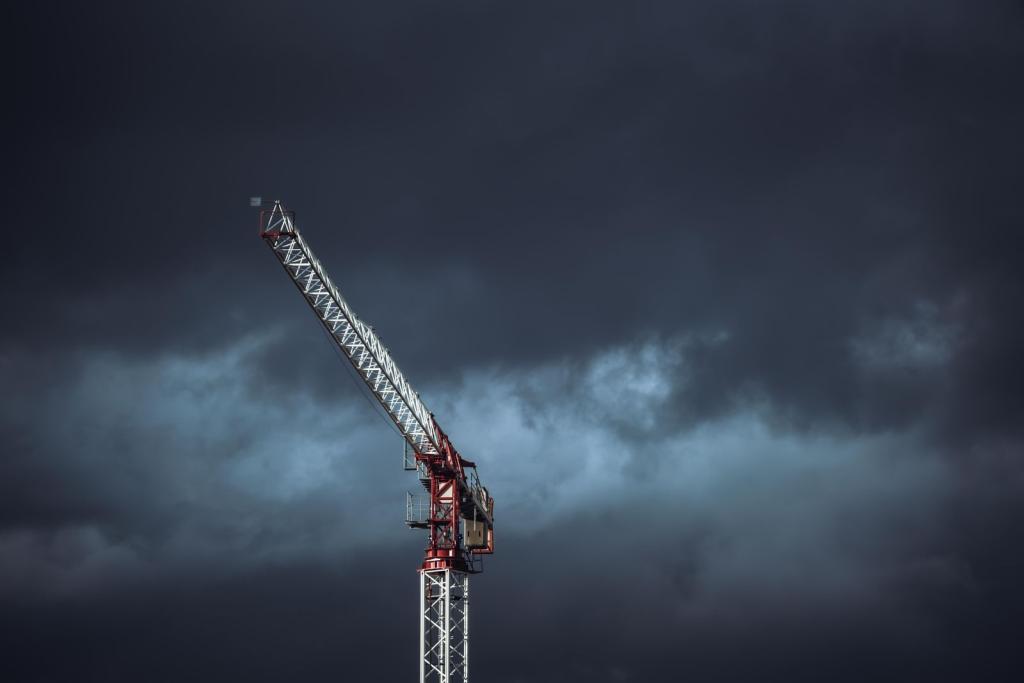
Lightning tends to find the tallest, most conductive path to the ground. On a job site, that’s often the very thing you’re building. A tower crane can be the highest point for blocks around. Steel framing, rebar and metal scaffolding give a strike plenty to travel through, and the OSHA and NOAA fact sheet specifically calls out cranes as especially vulnerable.
Open ground makes it worse. Early-stage sites are often cleared lots with no finished buildings, so crews may be a long walk from anything that counts as real shelter. Portable toilets, open-sided tents and partly framed structures don’t protect anyone.
Then there’s the work itself. Someone halfway through a crane pick, a concrete pour or a roofing tie-off can’t just drop everything. The fact sheet’s advice is blunt: when signs of a thunderstorm are approaching, workers shouldn’t start any task they can’t stop quickly. Lightning can also strike up to 10 miles (about 16 km) from any rainfall, so a patch of blue sky overhead tells you very little.
Writing a Site Lightning Safety Policy: Who Decides, What Triggers a Stop, and Where Crews Shelter

OSHA expects employers to have a written Emergency Action Plan, and for outdoor work it recommends that plan include a lightning protocol. A one-page lightning safety policy template for your site should answer three questions, with no room for debate.
Who decides
Name one person per shift with the authority to stop work, usually the site superintendent, plus a backup. Make it clear that nobody needs permission from the client, the schedule or the owner’s rep to call a stop. When everyone assumes someone else will make the call, crews stay out too long.
What triggers a stop
Write down the exact triggers. Thunder heard, lightning seen or a warning from your lightning system should all mean the same thing: stop and move. Don’t leave it to guesses about how far away the storm looks. List the high-risk tasks that need to wind down earlier, such as crane lifts, work at height and anything involving long metal materials.
Where crews shelter
Pick shelters before the season starts and walk new workers to them. NOAA recommends fully enclosed buildings with electrical wiring and plumbing. If there aren’t any on site, hard-topped metal vehicles with the windows rolled up are the fallback. As the National Weather Service’s outdoor lightning safety guidance makes clear, tents and open-sided shelters are not safe places.
Then time how long it takes your farthest crew to reach shelter, including the climb down from the upper levels. That number tells you how much warning you actually need. Train everyone on the plan and post a short version at the site trailer and the gate. A policy that lives in a binder doesn’t protect anybody.
Detection vs. Prediction: What Each Tells a Site Supervisor and How Much Lead Time You Get
This is where a lot of sites get caught out. The difference in lightning prediction vs detection matters most when a crew needs 10 minutes to get down from height.
A lightning detection system records strikes after they happen. It can show that a storm is active, roughly where it is and whether it’s moving your way. What it can’t do is warn you before the first strike in your area, because it needs a strike to measure. For a crew that needs several minutes to reach shelter, finding out after the first bolt is too late.
Prediction works differently. Thor Guard systems monitor the electrostatic energy in the atmosphere above the site and look for the conditions that build toward lightning. Every storm is different, so lead time varies, but Thor Guard’s typical warning is 8 to 20 minutes before lightning arrives near the monitored area. You can see how the two approaches compare on our prediction vs. detection page.
For a site supervisor, the practical question is simple: does the warning arrive before your slowest crew can reach shelter? If your evacuation time is eight minutes, a system that only reacts to nearby strikes leaves you hoping. An on-site sensor such as the TG360 also keeps working if the power or internet goes down, which matters on a site running on temporary services.
Alerting a Spread-Out Workforce: Horns, Strobes, Sirens and Mobile Alerts
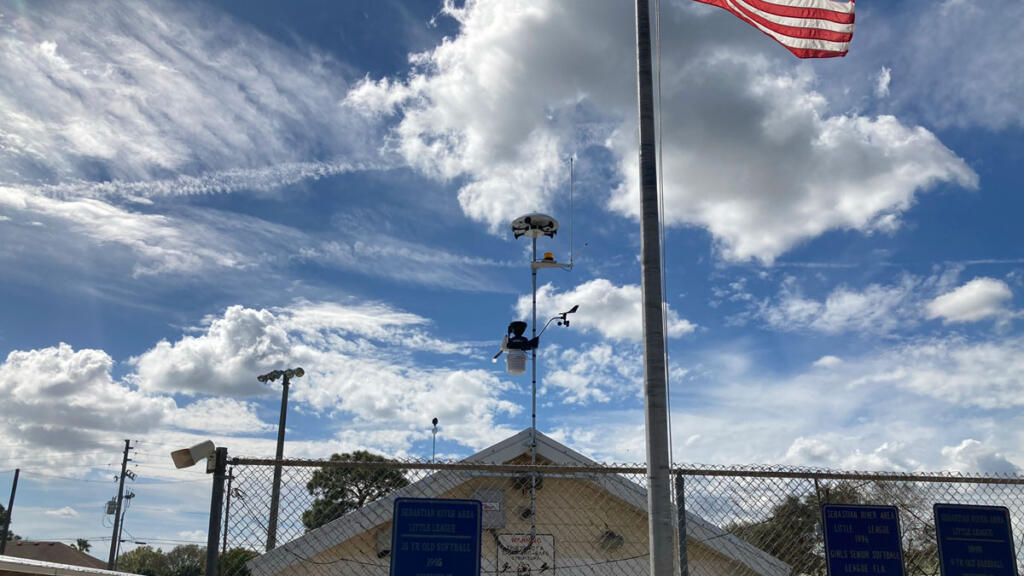
A warning only helps if every worker gets it. Construction sites are loud, spread out and full of people wearing hearing protection, so one method is rarely enough.
Lightning warning horn and strobe systems cover the open ground. Thor Guard’s Voice of Thor sounds a distinct horn pattern when conditions become favourable for a strike, and LED strobes keep flashing through the hazard period so anyone who missed the horn still sees it. Remote horns and strobes, AC or solar powered, can be placed around a large site, which helps on long linear projects or sites with several work zones. An outdoor warning siren system does a similar job on sites next to public areas, where people walking by also need to know something is happening.
Mobile alerts reach the people who are away from the horns: supervisors in the trailer, a crew at the far end of the property or a manager overseeing several sites. A lightning alert app like ThorAlert sends notifications from the TG360 system to Apple and Android phones, and users can choose the alert levels they want for lightning, heat, wind and emergencies.
Layer them. Horns and strobes for the people on the ground, phone alerts for the decision makers and radio calls from foremen to confirm every crew has moved. Test the whole chain during a drill, not during a storm.
Restarting Work Safely: Setting the All-Clear Rule
Plenty of lightning injuries happen because people go back out too soon. The storm looks like it’s passing, the rain eases and the pressure to finish the pour kicks in.
The standard guidance from OSHA, NOAA and the National Weather Service is to stay sheltered for at least 30 minutes after the last thunder. Every new rumble restarts the clock. Your policy should state that rule in plain words and name who gives the all-clear, ideally the same person who called the stop.
If you use a prediction system, tie the all-clear to it as well. Work should restart when the system has returned to a safe level and the waiting period has passed, not when somebody decides the sky looks better. Use the same signal every time and make sure crews know what it sounds like.
Before anyone climbs back up, have foremen check that equipment is safe to use, especially cranes and anything electrical, and do a quick headcount.
FAQ
Does OSHA require a lightning safety plan on construction sites?
OSHA recommends that employers include a written lightning safety protocol in their Emergency Action Plan for outdoor workers. It should cover how workers are warned, where they shelter, how long they need to get there and when work stops and restarts.
Is a portable toilet or site trailer safe during lightning?
Portable toilets, tents and open-sided shelters are not safe. A trailer only counts if it’s a fully enclosed building with wiring and plumbing. Otherwise, use a hard-topped metal vehicle with the windows up.
How much warning time does a construction crew need?
Time it. Measure how long your farthest crew takes to stop work, climb down and reach shelter, then add a margin. That’s the minimum lead time your warning system has to give you.
What about weather safety for outdoor workers beyond lightning?
The same planning applies to heat and high winds. Many sites roll lightning, heat and wind triggers into one weather safety plan for outdoor workers, so supervisors have a single set of rules to follow.
Stop Work Before the First Strike
Lightning safety on a construction site comes down to time. Know how long your crews need, make sure your warning gives you more than that and give one person the authority to act on it. Pair a clear written policy with prediction, layered alerts and a firm all-clear rule, and your crews will spend storms waiting safely instead of guessing.
If you’re reviewing your site’s lightning plan, the Thor Guard team can walk you through prediction and warning options for your projects.

